(With thanks to Fiona Leung of the Hong Kong Economic Times for the interview. The lead image and full article are reproduced and adapted into English from: 從 SEO 到 GEO 品牌如何在 AI 時代建立可信度?)
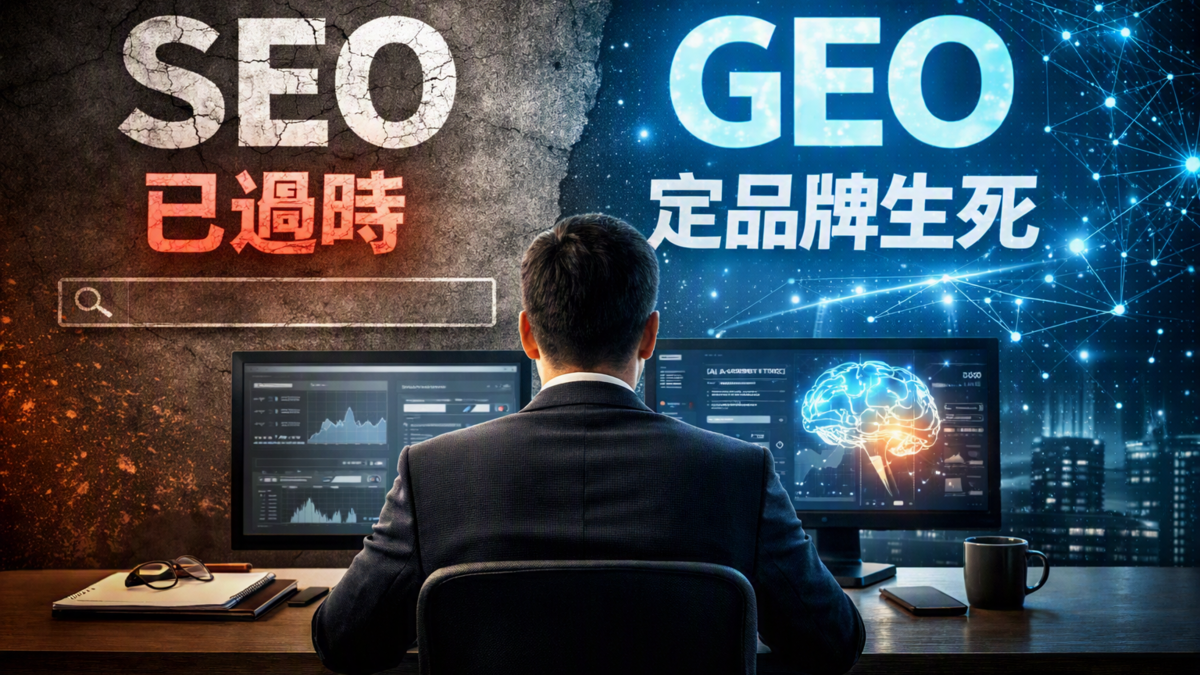
As social platforms and e-commerce have reshaped how brands reach customers and drive sales, SEO has become fundamental to digital marketing. But in the AI era, SEO alone is no longer enough. Brands must now address GEO (Generative Engine Optimization): the discipline of ensuring they can be accurately understood, trusted and recommended by AI.
Joseph Tang, Founder and CEO of AI-native IMAGE Asset consultancy VM | VOCAL MIDDLE, believes the next frontier of brand competition will not be defined solely by whether people can find a brand, but by whether AI systems can interpret it accurately, regard it as credible and recommend it consistently.
VM has invested in and developed ximu, an AI-native IMAGE Asset governance platform. According to ximu Product Lead Vitas Zhang, AI is already reshaping the consumer journey. People may now discover unfamiliar brands and products simply by asking an AI assistant—and move from discovery to purchase without passing through a conventional search journey. Brands must therefore think beyond attracting clicks. The more strategic question is whether they have established a clear and credible position within the semantic environments through which AI interprets the market.
With GEO gaining momentum, does SEO still matter? Tang and Zhang both argue that it does. Zhang describes SEO as a foundational layer for GEO. When generating answers, AI systems still draw on external search tools and established search infrastructure. If a brand has not secured basic discoverability, data consistency and well-structured content, it is far less likely to enter the information frameworks from which AI constructs its answers.
SEO, however, primarily addresses whether a brand can be found. GEO goes further by addressing whether the brand is considered credible enough to be trusted and recommended. This requires companies to build a coherent information ecosystem across their websites, media coverage, social channels and internal data—one that is consistent, clearly structured and readily interpretable by AI.
GEO may appear more complex and resource-intensive than SEO, potentially favouring large enterprises. Zhang sees a different possibility: GEO could create a new opportunity for smaller companies to leapfrog established competitors. By identifying a strategic opening within a specific market, language context or user need, small and medium-sized businesses can still earn disproportionate visibility in AI-generated recommendations.
The global AI landscape is not homogeneous. Companies of every size must identify their priority markets, languages and the AI tools their customers are most likely to use, then adapt their strategies to the characteristics of those models. Entering Mainland China, for example, requires an understanding of how systems such as DeepSeek, Qwen and Doubao differ in their treatment of source material, media authority and content structure.
Once SEO and GEO practices are in place, can a brand control what AI says about it? Tang argues that control is the wrong objective. The purpose of GEO is not to manipulate AI outputs at the end of the process, but to govern the source material that AI systems encounter, interpret and cite.
He uses the analogy of a reservoir. Every brand effectively has one, fed by internal information, its official website, external media coverage, social conversations and third-party sources. If those inflows are fragmented, outdated or contradictory, AI systems may reproduce errors, omit critical context or disproportionately surface narratives the brand would not choose to amplify.
GEO should therefore be understood as source governance, not end-stage output control. Brands need to ensure that their internal and external information is consistent, clearly structured and presented in ways AI systems can interpret and reference. The goal is for what ultimately flows out of the reservoir to be more coherent, more credible and more closely aligned with the brand’s intended positioning.
To make this performance measurable, ximu has developed the proprietary STI (Seen & Trusted Index), enabling companies to systematically assess brand visibility and trust across AI-generated answers and recommendation mechanisms. It helps business leaders understand where their brand currently stands in the AI ecosystem—and, just as importantly, identify the specific factors shaping its performance.
According to Accenture’s 2026 Consumer Survey, 85% of respondents in Hong Kong said they would be willing to let AI make purchases on their behalf, provided they retained an appropriate level of control. Tang sees this as a clear signal that personal AI agents are moving rapidly towards mainstream adoption. In the future, the first layer of search, comparison and purchase decision-making may increasingly be handled through interactions between a consumer’s personal AI agent and the large language models operated by platforms or brands.
For brands, the implication is urgent: they must govern their data and semantic assets now, or risk being misunderstood, overlooked and excluded from recommendations in the very first round of AI-to-AI communication.
Founded in 2014, VM VOCAL MIDDLE positions itself as an “IMAGE Architect” — an AI-native PR consulting firm built around AI-driven strategy and transformation.
Guided by the philosophy of Strategy-First | Data-Driven | AI-Empowered, VM transforms traditional strategic communications into measurable and sustainable IMAGE Assets through its proprietary PRaaS 2.0 (PR as AI Solution) framework, putting the core values of Trust · Influence · Resonance into practice.
In response to the rise of the generative AI era, VM developed its core infrastructure platform, ximu — an AI-native IMAGE Asset governance platform designed to help brands become seen, trusted, and preferentially cited within AI semantic systems.
The platform was co-developed alongside leading algorithm engineers from top academic institutions including National Taiwan University, Fudan University, and East China Normal University, with the mission of redefining how brands establish authority and visibility in AI-driven environments.
At the same time, VM GEO, built upon VM’s proprietary I.M.P.U.L.S.E. methodology and Silicon Valley AI search logic, was jointly developed by an international consulting team with academic backgrounds from institutions including National Taiwan University, Stanford University, New York University, and Tsinghua University.
Together, these systems enable brand governance in the AI era to evolve beyond communications — into a true discipline of trust engineering.
You May Also Like