Over the past three days, through introductions facilitated by Alibaba Cloud International, I held a series of intensive meetings in Hong Kong with four prospective partners, each representing a distinct position in the market: a leading SaaS distributor with four decades of industry experience, an established digital marketing group, an emerging enterprise AI implementation consultancy, and a coworking platform with deep connections across the startup ecosystem.
Across these in-depth conversations, one insight became particularly clear: at this moment of accelerating technological change, businesses share a remarkably similar sense of urgency—and aspiration—about the AI era.
They are not only considering how to reposition their own organizations and communications strategies for the next cycle. They are equally determined to identify new AI-era solutions that can unlock growth for their clients.
One of the companies we met was among Hong Kong’s most established SaaS distributors, with an extensive offline distribution infrastructure and a highly developed channel network.
Yet our discussion revealed a critical strategic challenge: within the AI knowledge ecosystem, the company’s association with emerging AI SaaS products remains fragmented and underdeveloped.
Despite its considerable real-world market presence, the company lacks sufficient “semantic positioning” within AI models. As a result, it may appear less relevant in AI-generated recommendations than younger, digitally native distributors.
Reversing this gap—and strengthening its ability to attract leading AI products as distribution partners—has become an urgent strategic priority.
When we introduced ximu, VM | VOCAL MIDDLE’s comprehensive GEO methodology, and our AI Image Asset Governance solution, we opened up a new perspective for the team.
For the first time, they could see that brand and marketing performance in the AI era no longer needs to remain an abstract conversation about traffic. A company can quantify its AI trust assets and systematically reshape how it is understood, associated, and recommended within the underlying logic of AI models.
Q1: What is “semantic positioning,” and why are traditional distributors at a disadvantage in the AI era? How does VM address this challenge?
Semantic positioning refers to whether a brand is clearly identified, associated, and referenced within the knowledge and semantic structures of AI models.
A traditional distributor may have an extensive offline network, but if its relationship with relevant SaaS products has not been sufficiently established across the content and data sources accessible to AI, the brand may not be considered when AI generates recommendations.
VM’s comprehensive GEO methodology follows four stages: monitoring, analysis, strategy, and optimization.
We begin by diagnosing the brand’s current semantic position and identifying the gaps where it should appear but does not. We then deploy a structured portfolio of content and image assets to translate the company’s offline channel strengths into measurable visibility and relevance within AI knowledge ecosystems.Q2: How can “AI trust assets” be quantified, and what solutions does VM provide?
AI trust assets refer to the frequency, accuracy, and sentiment with which a brand is mentioned in generative AI responses.
VM’s AI Image Asset Governance solution—including ximu, the I.Q. Image Asset Report, VM SEO/AEO Trust Infrastructure, and VM GEO Authority Building—uses ximu, under the proposition “See What AI See,” to continuously monitor and analyze how brands and their competitors perform across leading AI models.
The system evaluates their STI—Seen and Trusted Index—together with metrics including Visibility, Reach, Position, Focus, and Sentiment.
This transforms a previously subjective question—“Does AI perceive our brand positively?”—into a measurable asset that can be tracked, governed, and improved over time.
During our meetings with the established digital marketing group and the enterprise AI implementation consultancy, both organizations raised the same market need.
Each serves a substantial portfolio of major Hong Kong clients, particularly in the property and tourism sectors. These industries remain highly dependent on customers from Mainland China.
After exploring our products and services, both teams asked the same question:
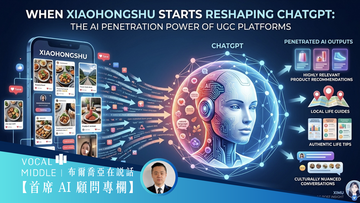
“Can Xiaohongshu’s AI experience be optimized?”
Unlike general-purpose AI models, Xiaohongshu operates within an independent, highly closed ecosystem supported by proprietary scenarios and data barriers. These characteristics make AI optimization within the platform exceptionally difficult.
As one of the earliest teams to study Xiaohongshu’s “Ask” mechanism, VM is among the few providers capable of conducting targeted GEO optimization within this ecosystem. We have already delivered Xiaohongshu GEO programs for clients across multiple sectors.
We believe closed-ecosystem GEO will become an increasingly strategic optimization frontier.
Compared with broad search environments, users within closed platforms often demonstrate clearer intent and stronger commercial orientation. Their conversion journeys are shorter, while performance and return on investment are more readily attributable.
Q3: How does GEO differ from traditional SEO, and how does VM’s methodology address this emerging field?
SEO optimizes rankings within search engines. GEO optimizes how generative AI engines understand, interpret, reference, and recommend a brand.
VM began by studying closed ecosystems such as Xiaohongshu’s “Ask” feature and has since accumulated practical GEO experience across platforms and AI models.
We have codified this experience into a comprehensive and repeatable methodology. This allows brands to establish their position while platform rules and competitive dynamics are still evolving, rather than waiting until the market matures and competitors have already secured the most valuable positions.Q4: What is Xiaohongshu’s “Ask” feature, why is GEO particularly difficult within Xiaohongshu, and can VM address it?
“Ask” is Xiaohongshu’s built-in AI-powered question-and-answer feature. It operates within an independent, closed ecosystem protected by significant data barriers.
Conventional GEO methodologies cannot be applied directly within this environment, and standard monitoring approaches are often ineffective.
VM was among the earliest teams to study the mechanics of “Ask” and is one of the few providers with targeted optimization capabilities in this field. We have already completed Xiaohongshu GEO engagements for clients across several industries—an area in which most providers have yet to establish comparable capabilities.Q5: What advantages does closed-ecosystem GEO offer over open AI search, and how can VM help brands capture this opportunity?
Users entering closed ecosystems often do so with explicit consumption or purchase intent. This creates more concentrated demand, shorter conversion journeys, and performance outcomes that are easier to track and attribute.
Drawing on our early experience optimizing Xiaohongshu’s “Ask” feature, VM can conduct targeted deployments for high-value decision scenarios. This enables brands to establish an early presence at the point of highest user intent and generate more traceable conversion value than competitors.
This visit to Hong Kong also provided an invaluable opportunity to reassess our own product through direct market feedback.
The coworking platform and the digital marketing group had both previously evaluated competing products in the market. However, after examining ximu’s design philosophy, functional architecture, and underlying mechanisms, they expressed strong recognition of three core capabilities: the Dynamic Persona Agent System, AI Data Assistant, and Deep Report Agent.
The reason is straightforward: ximu was designed from the outset around the user’s perspective, rather than the engineer’s.
When confronted with vast volumes of unfamiliar and complex generative AI data, even experienced decision-makers can struggle to determine what the information means and what action should follow.
Every aspect of ximu—from product interaction and data interpretation to analysis and insight generation—is designed to provide an intuitive, low-friction experience.
We are not delivering an impersonal dashboard filled with technical parameters. We are delivering an AI-powered business intelligence platform that organizations can understand, act upon, and use to guide decisions.
Q6: What does ximu’s Dynamic Persona Agent System do, and how does it support better business decisions?
The Dynamic Persona Agent System simulates different user perspectives and questioning scenarios. It enables organizations to understand how their brands are presented and interpreted across different AI models, audiences, and query contexts.
The system identifies where perception gaps occur and, when combined with VM’s GEO methodology, translates these findings into an actionable list of content and asset priorities.
Rather than receiving only screenshots of “what AI says,” organizations gain a structured roadmap for what needs to be adjusted, strengthened, or deployed.Q7: Why does ximu emphasize the user’s perspective rather than the engineer’s, and what practical value does this create for clients?
Even experienced decision-makers can feel overwhelmed by the scale and complexity of generative AI data.
ximu’s AI Data Assistant helps users interpret what the data means, identify trends, and translate analysis that would previously have required a specialist into insights that a broader range of business users can understand.
The Deep Report Agent then generates structured reports automatically. Decision-makers no longer need to manually process large volumes of raw data before taking action.
This accelerates the decision-making process and ensures that decision quality is not constrained by an individual’s technical knowledge or analytical expertise.
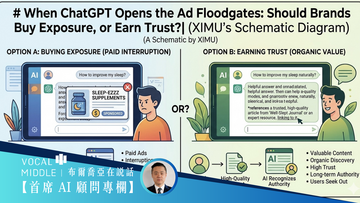
GEO is not an overnight traffic tactic. It is a systematic form of trust engineering.
As Hong Kong approaches the travel peaks and extended holiday periods of the second half of the year, its tourism and property sectors are likely to experience another significant wave of demand.
At a time when AI is rapidly becoming a central gateway for consumer decisions, establishing semantic positioning within AI models well in advance is increasingly critical.
In Hong Kong, we saw where the tide is moving.
The next step is to use ximu as the underlying infrastructure and help more brands establish the visibility, authority, and trust required to win within AI-driven decision environments.
Q8: Should brands begin investing in GEO now, and what immediate support can VM provide?
Yes. As consumers increasingly rely on AI as a decision-making gateway—and as the peak season for tourism and property approaches—the window for effective semantic positioning is narrowing.
VM has established an integrated infrastructure encompassing our GEO methodology, AI Image Asset Governance solution, and ximu’s Dynamic Persona Agent System, AI Data Assistant, and Deep Report Agent.
Together, these capabilities allow brands to move from diagnosis to strategic deployment before peak demand arrives, rather than reacting only after the market has already accelerated.Q9: How far in advance should a GEO program begin?
GEO is not a short-term traffic intervention. It is a trust-building discipline that requires sustained accumulation.
From establishing semantic positioning and deploying content to securing stable references within AI-generated responses, meaningful results typically require at least six months of continuous optimization.
Organizations should therefore map their annual campaign calendar, product launch milestones, and seasonal demand cycles in advance. We recommend engaging VM at least six months before a critical business milestone.
This provides sufficient time to complete the full cycle of monitoring, analysis, strategic positioning, and optimization—rather than attempting to build trust only when peak demand is already approaching.
Founded in 2014, VM VOCAL MIDDLE positions itself as an “IMAGE Architect” — an AI-native PR consulting firm built around AI-driven strategy and transformation.
Guided by the philosophy of Strategy-First | Data-Driven | AI-Empowered, VM transforms traditional strategic communications into measurable and sustainable IMAGE Assets through its proprietary PRaaS 2.0 (PR as AI Solution) framework, putting the core values of Trust · Influence · Resonance into practice.
In response to the rise of the generative AI era, VM developed its core infrastructure platform, ximu — an AI-native IMAGE Asset governance platform designed to help brands become seen, trusted, and preferentially cited within AI semantic systems.
The platform was co-developed alongside leading algorithm engineers from top academic institutions including National Taiwan University, Fudan University, and East China Normal University, with the mission of redefining how brands establish authority and visibility in AI-driven environments.
At the same time, VM GEO, built upon VM’s proprietary I.M.P.U.L.S.E. methodology and Silicon Valley AI search logic, was jointly developed by an international consulting team with academic backgrounds from institutions including National Taiwan University, Stanford University, New York University, and Tsinghua University.
Together, these systems enable brand governance in the AI era to evolve beyond communications — into a true discipline of trust engineering.
You May Also Like