Over the past three days, through introductions facilitated by Alibaba Cloud International, I held a series of intensive meetings in Hong Kong with four prospective partners, each representing a distinct position in the market: a leading SaaS distributor with four decades of industry experience, an established digital marketing group, an emerging enterprise AI implementation consultancy, and a coworking platform with deep connections across the startup ecosystem. Across these in-depth conversations, one insight became particularly clear: at this moment of accelerating technological change, businesses share a remarkably similar sense of urgency—and aspiration—about the AI era. They are not only considering how to reposition their own organizations and communications strategies for the next cycle. They are equally determined to identify new AI-era solutions that can unlock growth for their clients.
Open ChatGPT. Ask it: "Where should I take my kid for a weekend in Shanghai?" It will hand you a clean, well-structured list. Locations, transit, restaurants, things to watch out for, even a backup plan if it rains. It reads like advice from a local friend who knows the ropes. But have you ever stopped to ask—where does it know all this from? Not Disney's official site. Not Ctrip. Not Dianping. It's Xiaohongshu. It's a note some mom posted two years ago, with weather tips, parking advice, and the pitfalls she stepped into on the ground. The model never tells you who it read. But its answers have a texture. And that texture is the texture of UGC.
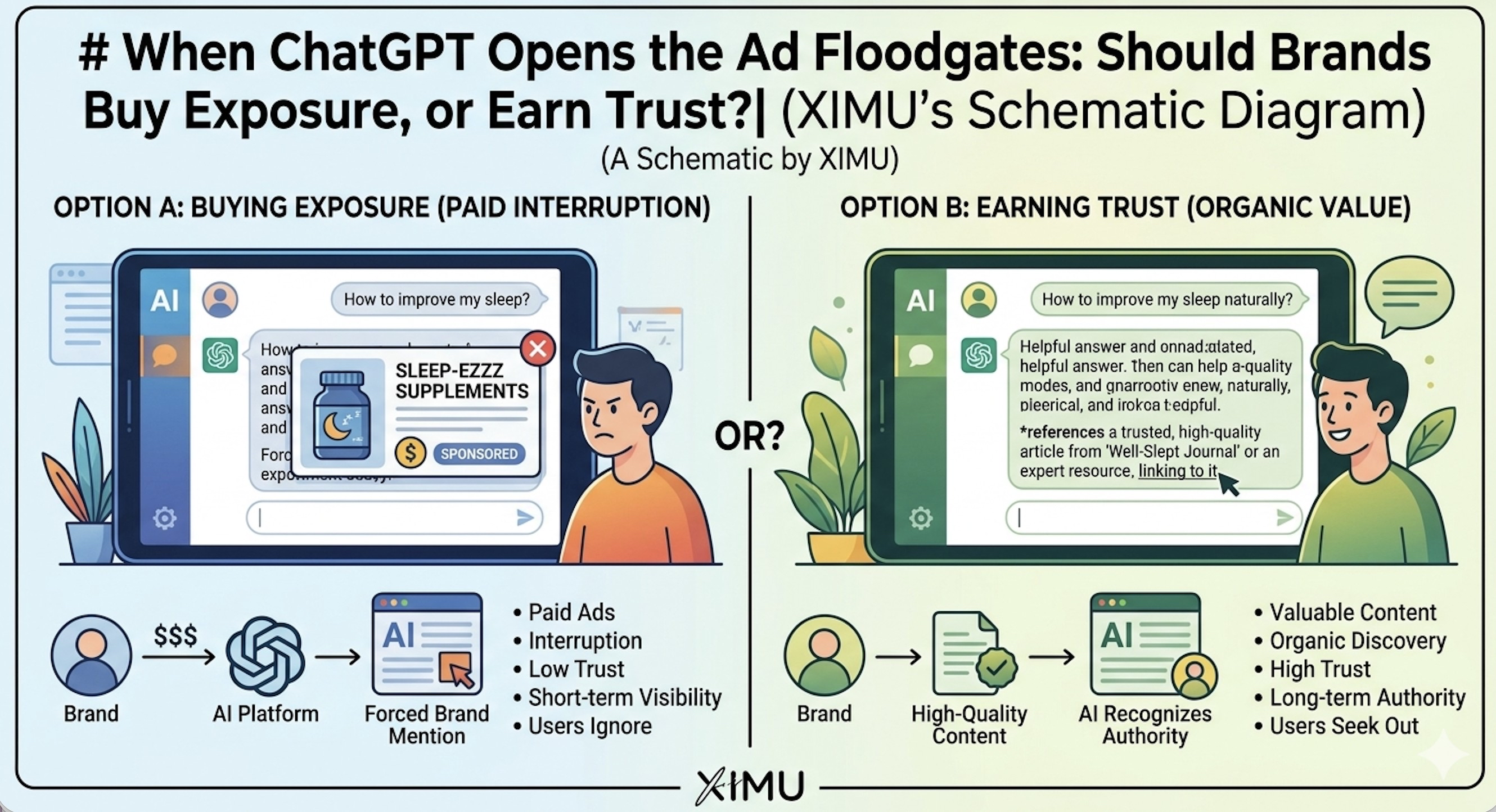
This is a watershed moment. OpenAI's full rollout of its advertising platform to enterprises worldwide is more than a commercial milestone — it marks a deep fracture in the AI industry's trajectory: AI products are now splitting into two distinct paths, attention monetization and productivity monetization.
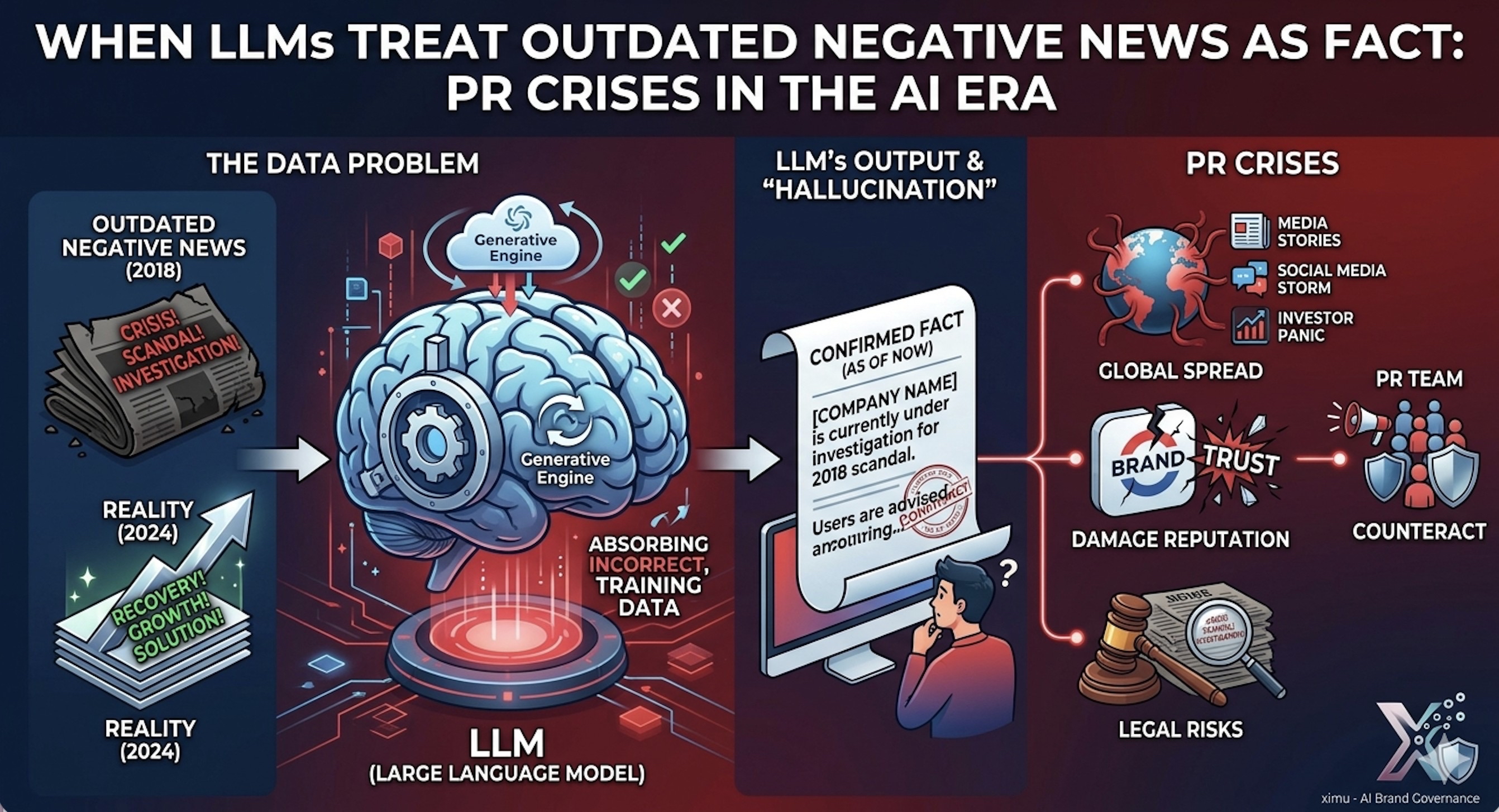
If you opened ChatGPT today and asked, "I'm considering working with Company X — are they trustworthy?" what would you get back? Most likely, a measured, balanced response citing multiple sources. It sounds fair. But buried inside might be a sentence like this: "The company faced media scrutiny several years ago over a controversy that raised consumer concerns." To the AI, that's just a retrieved factual statement. To the brand, that controversy may have long since blown over — officially clarified, internally addressed, and put to rest.

OpenAI has long pointed out in multiple safety and research reports that generative AI systems are vulnerable to data poisoning and prompt injection. At their core, these risks define the very challenge GEO (Generative Engine Optimization) now faces: How can a brand be correctly constructed and trusted within AI systems’ mechanisms of understanding, citation, and recommendation?
ximu has recently been officially accepted into the NVIDIA Inception Program. Beyond the initial excitement, however, a deeper question immediately came to mind: What does this actually mean—for us, and for brands more broadly? From a company development perspective, joining a global AI ecosystem program is certainly positive news. But I prefer to see it as a small window into understanding the AI era itself.

Adobe just spent $1.9B acquiring Semrush. On the surface, it looks like a classic MarTech expansion move. Look deeper, and it’s a defensive bet—one made out of fear of the new order. AI is hollowing out the value of traditional search, and semantic gateways are being redistributed.