Dear all,
Each July, following VM’s annual internal workshop, I take time to reflect on the journey we have undertaken—and the future we are preparing to build.
This is neither an anniversary message nor simply a review of our performance. It is, rather, an account of our evolution: what we have observed over the past year, what we have chosen to leave behind, and what we are determined to become.
This year, that reflection begins with a journey once interrupted by the pandemic.
Long before the pandemic, I had begun laying the groundwork for VM’s expansion across Asia-Pacific.
From Shanghai and Nanjing to Hong Kong, Singapore and Tokyo, we met with key partners, studied local markets and explored potential models of collaboration. Throughout that process, we sought to answer a question for which we did not yet have a complete answer:
How could a public relations consultancy founded in Taiwan bring its methodologies, talent and service capabilities to the broader Asian market?
Then the pandemic arrived.
Flights were replaced by grids of virtual meetings, and a regional strategy that had only begun to take shape was abruptly put on hold for three years.
It was not until the second half of 2024 that we formally embarked on the next phase of VM’s internationalisation and technology transformation.
This time, we had greater clarity.
Internationalisation could not be built on relationships and physical presence alone. Nor could technology transformation be achieved simply by adopting more tools. We needed a deeper organisational capability—one that could transform VM’s accumulated market intelligence, consulting methodologies, stakeholder insights and cross-border experience into a system that could be replicated, scaled and continuously improved.
During our first decade, we invested in business intelligence systems, data dashboards and internally developed Python tools. To be candid, we invested considerable resources and took more than a few detours. Some of those investments became lasting systems; many others became valuable, if costly, lessons.
As we entered our second decade, the emergence of OpenAI fundamentally changed the technological landscape. By the end of 2024, we had the opportunity to work alongside outstanding technology partners and trend researchers across Greater China to explore how rapid developments in generative AI and large language models could enable us to build a truly AI-native system.
That was an important starting point—but it was not the final answer.
After more than a year of development, refinement and market validation, we made the decision to retire our first-generation system. We had become increasingly convinced of one principle:
Generative AI that is not deeply integrated with services, data, workflows and commercial decision-making—however impressive it may appear—ultimately risks becoming little more than an accelerated engine for producing low-value content.
Allowing the first answer to give way does not represent failure. On the contrary, it is often the point at which genuine technology transformation begins.
For twelve years, VM has remained committed to three principles: Trust, Influence and Resonance.
Trust enables an organisation to be chosen. Influence enables it to drive change. Resonance enables it to build enduring relationships with its stakeholders.
These principles have not changed. What has changed is the environment in which they are formed.
They no longer exist solely within media, social platforms and human markets. Increasingly, they are also being shaped by how AI systems retain, interpret and present information.
As consumers, investors, journalists, corporate buyers and potential partners begin consulting AI before deciding whether to engage with a company, brand competition starts to unfold across two interconnected environments: the Human World and the AI World.
We therefore stopped asking:
“How can AI help VM work faster?”
Instead, we began asking a more fundamental question:
As AI reshapes the gateways to information and commercial decision-making, what should a public relations consultancy become?
In 2026, we redefined EPISODE V: The Protocol.
Here, “Protocol” is not merely a name. It represents a new framework for brand communication and governance—one designed to ensure that companies can be seen, accurately understood, cited and trusted across both human and AI environments, and ultimately recommended at critical moments of decision.
Traditionally, we defined target audiences through personas before selecting the media and channels through which to communicate.
Today, we can go one level deeper:
Which stakeholders, in which decision-making contexts, are forming favourable or unfavourable judgements about a brand? Which issues are shaping those judgements? On which platforms, through which information sources, and in response to which types of queries are those judgements being formed?
When these signals are brought together within ximu, they cease to be isolated data points.
Companies can observe perspectives emerging from both human markets and AI-generated responses. They can understand the relationships among stakeholders, contexts, issues, platforms, sources and queries.
More importantly, they can identify which competitive strengths are being overlooked by particular AI models, where competitors are gaining ground within specific semantic territories, and where the next opportunity to establish an advantage may emerge.
An Intelligence Deck captures what is discovered at a particular moment in time. True image asset governance, however, requires intelligence to be continuously accumulated, compared, refined and strengthened.
A report is a snapshot.
Governance is a continuously evolving system.
On the surface, ximu is a platform. What it truly embodies, however, is the public relations judgement, brand methodology and stakeholder governance experience that VM has accumulated over twelve years.
VM is responsible for understanding the commercial fundamentals of an organisation, defining the right questions and developing the appropriate governance strategy.
ximu makes signals from the AI environment visible, measurable and comparable.
Our consultants, AI agents and operating systems then work together to translate those insights into action.
What we are building, therefore, is not another Dashboard designed merely to display data. We are building a deeper intelligence infrastructure—one capable of continuously accumulating data, codifying consulting judgement, developing cross-market knowledge and transforming high-frequency workflows into AI-enabled processes.
It also enables the outcomes of individual projects to become reusable methodologies, modules and organisational assets.
This has changed the way we think about growth.
Growth is no longer simply about producing more content, increasing media investment or distributing messages across a greater number of channels.
Effective growth begins with knowing precisely where to concentrate resources: in which market, on which platform, through which source, around which query, and within which decision-making context.
AI image asset governance is therefore not merely a defensive discipline for protecting brands.
It is also a new methodology for precision growth.
I have often said, half in jest, that I am half a Hongkonger.
Hong Kong is my father’s home. The hope that I might one day return and build something of lasting value here has remained with me for many years.
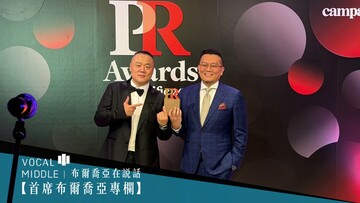
In June this year, ximu was named the winner of Best AI Product or Service at the PR Awards Asia-Pacific 2026.
For us, this represented more than recognition for a product. It was an external signal that the market is beginning to acknowledge a fundamental shift:
As AI becomes an increasingly influential gateway to information and decision-making, companies need more than additional content or another marketing tool. They need an entirely new approach to brand trust and image asset governance.
Amid our excitement, we also began considering more seriously how Hong Kong could serve as a strategic gateway for VM’s next phase of internationalisation.
In July, my business partner and I returned to Hong Kong to meet with clients and prospective partners through a series of in-depth discussions.
Like Taiwan, Hong Kong has not yet developed a fully established understanding of emerging concepts such as GEO, AI marketing and AI-enabled brand governance. Yet the market possesses an exceptional degree of commercial acuity.
Business leaders here rarely dwell on terminology for long. Their next questions are usually more pragmatic:
How can this become part of corporate governance?
How can it be integrated into an existing business model?
How can it create greater value for current clients?
And how can it generate new sources of revenue?
This is precisely what makes Hong Kong so compelling to us.
Hong Kong sits at the intersection of international commerce, capital markets, professional services and cross-border transactions. It has a distinctive ability to translate emerging technologies into governance priorities, commercial models and growth opportunities.
For VM, Hong Kong therefore represents far more than an overseas presence.
It is a gateway through which we can bring the methodologies we have developed across Asia-Pacific to the wider world. It is also a proving ground where we can test whether those methodologies have the potential to become international standards.
Following two years of rebuilding and recalibration after the pandemic, VM has done far more than introduce a new service.
We have reshaped our organisational model, operating system, product architecture, consulting delivery and business development approach.
We have also reconsidered a fundamental question:
What lasting value should remain after every project is completed?
Today, I would define New VM in the following way:
VM is an AI-native public relations consultancy—and is evolving into an essential image asset governance and precision growth engine for enterprises in the AI era.
What we help companies manage is no longer limited to media exposure.
It encompasses how visible and credible they are, how their information is interpreted and cited, and whether they are recommended across both the Human World and the AI World.
What we deliver should therefore no longer be limited to a press release, an event or a report. We must build IMAGE Assets that can be continuously monitored, analysed, governed and amplified.
The service-driven side of VM provides real-world market insight, client trust and consulting judgement. The product-driven side of VM converts that judgement into data, AI agents, systems and scalable solutions.
Without services, products risk losing touch with the realities of the market.
Without products, services struggle to move beyond the limitations of human capacity.
If large agency groups resemble aircraft carriers, VM has no intention of building a smaller version of the same vessel.
Instead, we aspire to become the precision intelligence infrastructure for a new competitive landscape: a trusted operational map and a long-term governance partner that helps companies build enduring AI trust assets.
In the months ahead, we will devote more time and resources to international markets.
This does not mean rushing to place more flags on a map or establish offices in every city. One of the most important lessons we learned before and after the pandemic is that internationalisation should not be measured by the number of addresses a company maintains.
It should be measured by the formation of capabilities, partnerships and sustainable revenue networks.
We will use the operating model we have developed in Taiwan as both a proof of concept and a laboratory for methodological innovation.
Together with more Taiwanese companies, we will establish AI trust baselines, governance dashboards, image asset frameworks and benchmark cases that can be understood and recognised by international markets.
At the same time, Hong Kong will serve as our gateway for cross-border commerce and international communication. Through Hong Kong, we will progressively connect with clients, media, technology partners and commercial ecosystems in Shanghai, Singapore, Tokyo, and other markets across Asia-Pacific and beyond.
Taiwan is not our back office.
It is our methodology and product innovation laboratory.
Hong Kong is not merely an address.
It is the gateway through which we translate those methodologies into the language of global business.
Our ambition is to bring methods validated in Taiwan to the world, while bringing the world’s most advanced market challenges back to Taiwan—so that we can continue to calibrate, validate and grow alongside the enterprises we serve.
VM’s vision for its second decade is:
The New Order: Seen and Trusted by Humans & AI.
This New Order is not a declaration that we possess every answer.
It is our commitment to building a new common language and a new governance standard—one that allows Trust, Influence and Resonance in the AI era to move beyond abstract perceptions.
They must become visible, measurable, discussable and governable. More importantly, they must become strategic assets capable of generating sustained growth.
In the second half of 2026, we will do less of what merely generates attention and more of what compounds trust.
We will pursue fewer one-off moments of visibility and build more assets capable of sustained growth.
We will rely less on indiscriminate channel expansion and focus more precisely on the platforms, sources, issues and queries where meaningful advantage can be established.
Every communication should generate data.
That data should be structured.
Structured data should produce intelligence.
Intelligence should inform governance.
And governance should ultimately translate into growth.
Our purpose is not simply to help brands say one more thing.
It is to ensure that, before the people and AI systems that matter most, a brand becomes an answer more worthy of understanding, more worthy of citation—and more worthy of trust.
The tide has already changed course.
This time, we will not merely ride the wave.
We intend to help chart the course ahead.
You May Also Like