Two weeks ago, an interview with Pan Fei, CEO of BlueFocus—China's largest publicly listed marketing group—sparked widespread discussion across the industry. The most significant takeaway was not the company's impressive AI-driven revenue growth, but how it has embedded AI into the very foundation of the organization: from culture and talent evaluation to business transformation and global expansion.
What does this signal for the communications industry?
As AI reshapes how brands are understood, cited, and recommended, the value of public relations—and the communications industry as a whole—can no longer be defined solely by media exposure, reach, or relationships. Brand competition has entered an entirely new battleground: AI's memory.
At this turning point, VM | VOCAL MIDDLE has chosen a fundamentally different path from large-scale marketing groups. We position ourselves as an IMAGE Asset Governance company for the AI era.
If BlueFocus is an aircraft carrier—built on global resources and large-scale execution—then VM is the navigation system. We help brands map the new battlefield, calibrate their position, and establish the trusted signals that enable them to be discovered, understood, and trusted by both humans and AI.
The following is a personal perspective by Joseph Tang, Founder & CEO of VM.
For decades, the communications and marketing industry operated on a simple belief: if a brand could be seen, it had a chance to be chosen.
That belief shaped an entire generation of communications strategy. We chased impressions, media coverage, search rankings, social engagement, and share of voice. Brands competed to shine brighter in increasingly crowded markets, believing that greater visibility would naturally attract greater attention.
But the rise of AI is fundamentally changing that equation.
The next era of brand competition will no longer take place solely in front of human audiences. Increasingly, it will take place inside AI-generated answers.
Consumers are no longer searching only for "the best brand." They are asking AI directly:
"Which company should I work with?"
"Which product should I buy?"
"Is this brand trustworthy?"
At that moment, a brand's future is determined not only by advertising budgets or search rankings, but by how AI understands, organizes, interprets, cites, evaluates, and ultimately recommends that brand.
This represents one of the most significant turning points the public relations industry has ever faced.
The Chinese marketing group generated RMB 68.693 billion in revenue in 2025, with overseas advertising contributing RMB 56.496 billion—representing over 82% of total revenue. During the same period, AI-driven business generated RMB 3.725 billion, while token usage surpassed one trillion.
What makes this transformation remarkable is not simply the scale of the numbers. BlueFocus did not adopt AI merely as a productivity tool. Instead, it rebuilt its organization, products, performance systems, globalization strategy, and revenue model around AI as a common operating foundation.
The lesson is not about how large BlueFocus has become.
It is about a question every professional service firm must now confront:
When AI becomes capable of performing the expertise your business was built upon, do you defend your existing business—or reinvent yourself into an entirely different kind of organization?
For public relations firms, this question is particularly profound.
Traditionally, PR has been responsible for shaping narratives, building relationships, managing reputation, influencing perception, and navigating trust. These capabilities appear highly human, yet they have always depended on one critical assumption—that humans remain the primary interpreters of information.
Generative AI is changing that assumption.
Brands are no longer understood only through media coverage, public conversations, or search engine indexing. They are increasingly absorbed into large language models, reorganized within knowledge systems, and retold through AI-generated narratives.
In other words, brands have entered a second battlefield:
the memory of AI.
That is why the next generation of PR firms should stop asking only,
"How do we get our clients into the media?"
Instead, they should ask,
"How do we enable brands to become answers that AI is willing to understand, cite, and recommend?"
BlueFocus is evolving into a large-scale AI-powered marketing ecosystem.
VM is building something different: an IMAGE Asset Governance company for the AI era.
If BlueFocus resembles an aircraft carrier—with enormous media buying capabilities, global resources, and operational scale—VM is building the arsenal and navigation system behind the mission.
Our role is to help brands understand the new battlefield, establish trusted coordinates, build credible evidence, and strengthen the assets that enable them to be discovered, understood, and trusted in AI environments.
Today, VM positions itself as an AI-native public relations consultancy operating under the PRaaS 2.0 framework, with IMAGE Asset Governance at the center of its value proposition.
Our ambition is not simply to deliver communications campaigns.
It is to transform strategic communications into IMAGE Assets that can be governed, measured, accumulated, and continuously strengthened over time.
This represents a fundamental rewrite of the PR value chain.
In the past, brand assets primarily existed in consumers' minds, media archives, and market reputation.
Today, they must also exist within knowledge structures that AI can accurately interpret.
In the past, a press release was communication material.
Today, it also becomes evidence that helps AI understand a brand.
In the past, media coverage generated awareness.
Today, credible media coverage can become one of the sources AI relies upon when explaining or recommending a brand.
In the past, brand narratives were written for people.
Today, they must also be structured so AI can parse, classify, verify, and reproduce them accurately.
This is not SEO with a new name.
Nor is it simply another form of content marketing.
It represents a broader transition—from governing exposure to governing perception.
Greater China is uniquely positioned to benefit from this new capability.
The region stands at the intersection of globalization, AI transformation, and trust reconstruction.
Taiwanese companies expanding internationally must establish credibility across languages and cultures.
Chinese companies going global must reduce cultural misunderstanding and trust erosion.
Hong Kong and Singapore naturally serve as bridges between international capital, legal systems, multilingual business environments, and Chinese-speaking markets.
Brands today need more than global visibility.
They need to be correctly understood across markets, languages, and AI systems.
Real vision is not about talking about AI.
It is about having the courage to reinvent how you create value.
Real differentiation is not owning another software platform.
It is defining an entirely new industry standard.
BlueFocus teaches us that legacy industries survive only when they acknowledge that yesterday's success formula may no longer work.
VM's response is different.
If brand competition is moving into AI-generated answers, then the mission of public relations can no longer end with helping brands speak.
Our responsibility is to help brands build IMAGE Assets that earn trust from both humans and AI.
Some will gradually disappear from AI-generated answers.
They may have accumulated campaigns, media exposure, advertising, and publicity, but their signals remain fragmented, inconsistent, and short-lived. They never become coherent enough for AI to build lasting trust.
Others will become the answers AI consistently recommends.
Their positioning is clear.
Their evidence is credible.
Their content is trustworthy.
Their reputation is consistent.
Their information reinforces itself across channels and platforms.
They are not recommended by chance.
They are recommended because they have built strong IMAGE Assets.
That is the new battlefield for public relations.
Not louder.
More trustworthy.
Not more exposure.
Deeper memory.
Not creating another moment of attention.
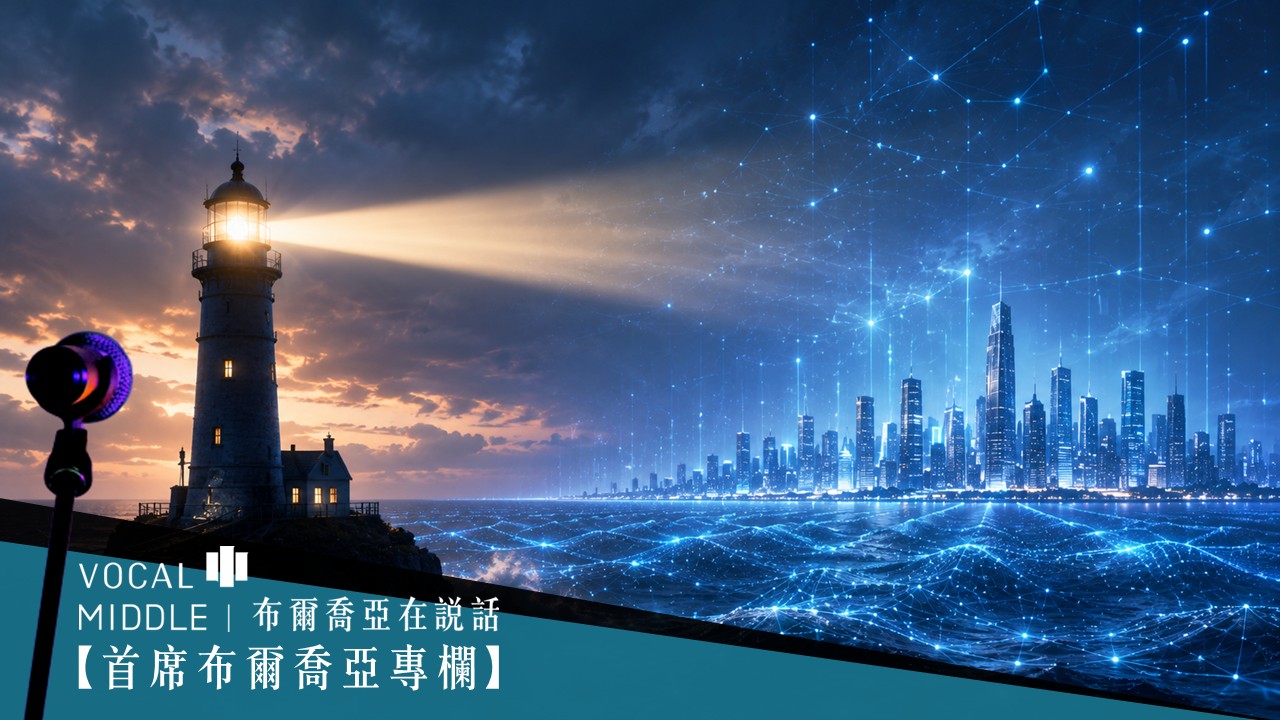
But building a lighthouse that both humans and AI can reliably find.
You May Also Like