With many generative-AI tools competing for attention, AICE needed marketing decision-makers to understand ADGo’s role. VOCAL MIDDLE organised three interviews around creative control, collaborative AI and wider access to creative resources, placing technology in working situations through Global Views, Business Next and Meet Startup.
ADGo needed to be understood as more than another AI tool. The project addressed marketing decision-makers, creative practitioners and investors, explaining how the product was positioned within strategic thinking and creative work, and the market judgement behind it.
Creative professionals often ask whether quality can be controlled, ideas can be implemented and teams can use the system—not simply whether AI can produce output. A list of features does little to answer these questions. VOCAL MIDDLE extended the conversation from speed to creative quality and human–AI collaboration.
Distinguish the questions of different stakeholders
Managers consider team value, practitioners need practical control, and investors examine positioning and market opportunity. Interview material reflected those differences while returning to ADGo’s role as a marketing thinking partner.
Give each interview a distinct purpose
Business Next, Global Views and Meet Startup connected the story with marketing technology, enterprise decision-making and entrepreneurship. The articles approached industry problems, controllable and modular creativity, and practical operation from different angles.
Replace technical lists with cases and attributable explanations
Platform ideas became questions about pitches, collaboration and access to creative resources. Readers could understand the work the product was intended to support and identify who was explaining it.
The three outlets published interview content connecting AICE and ADGo with marketing work and AI collaboration. The documented outcome is publication and differentiated subject coverage, not measured adoption, revenue or an increase in market trust.
Marketing leaders ask whether they retain judgement and control, not only how fast AI works. The interviews provide attributable answers across different outlets, creating public information for people and AI to consult. The case does not report AI-answer retesting or inner-layer governance, and historical ADGo work is not renamed ximu.
Primary — Local → Local: Taiwan marketing and business readers were the principal audience. Product capabilities became questions teams ask before adoption.
Enabling — Global → Local: Global generative-AI developments supplied context, while local creative workflows and language shaped understanding.
Possible next step — Local → Global: The interview framework can inform overseas introductions with local use cases and evidence for different buyers.
Cross-market adaptation: Global → Global communication would maintain consistent product facts while adapting languages, workflows and sources. Taiwan interviews do not establish global adoption.
1 Why use interviews?
Creative control and workflows need space for explanation beyond a feature announcement.
2 How were audiences separated?
Material addressed the different questions of marketing managers, practitioners and investors.
3 What were the central ideas?
Creative control, collaborative AI and wider access to creative resources.
4 What was delivered?
Three interviews in Global Views, Business Next and Meet Startup.
5 How does this relate to AI PR?
The interviews supply traceable product–workflow relationships in public information, without claiming improved AI recommendations.
行銷人用AI大忌:不敢說「你的點子很爛」!如何為創意串接AI助理?關鍵在3秘訣
行銷和廣告人專屬「AI代理」,艾思智創ADGo縮短3倍工時的秘訣是?
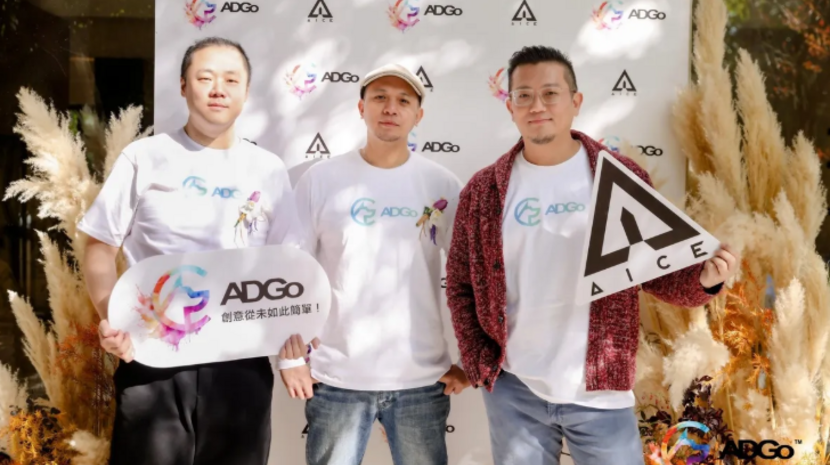
ADGo Taipei Launch Explaining AI Marketing Collaboration Through Experience
Discuss Your Communication Challenge
Tell us who needs to understand your business and the decision they face. VOCAL MIDDLE can help connect strategy, evidence and communication.