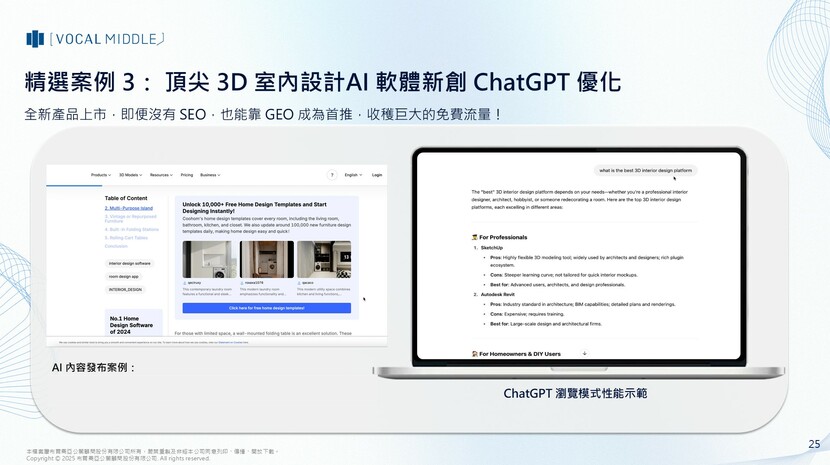
An undisclosed 3D interior design platform needed to explain its value to different users. The VM GEO project team organized content for professional designers, large design firms, and homeowners or DIY users. Features were connected to selection scenarios. This case presents the resulting audience structure and product positioning framework rather than a ranking claim.
The 3D interior design platform wanted relevant tool queries to explain which users and design tasks its product served. The project organized information around selection criteria for professional designers, large design firms, and homeowners or DIY users. Flexibility, organizational use and ease of learning received different priorities across those groups. The VM GEO project team used that structure to connect capabilities with practical decisions, creating an audience-specific product account rather than simply adding more feature descriptions.
Interior design software choices depend on skill, work scale and purpose. A professional designer may examine flexibility and applications, a design firm may consider workflows and organizational fit, and a homeowner may prioritize learning and operation. The same feature list can leave these priorities unclear when used for every query. The original case therefore segmented audiences before reframing capabilities as tasks and user value. This version retains that strategic decision and focuses on the relationship among audience, need and capability. Each content group has a defined user and selection question, providing a clearer basis for product explanation and comparison.
Structure content by user role
The team separated professional designers, large firms and homeowners or DIY users, assigning different priorities to flexibility, workflow and learning.
Translate features into design tasks
Starting a design, using models and planning a space gave capabilities a practical context and a basis for product comparison.
The case established content groups for professional designers, large design firms and homeowners or DIY users, and organized platform capabilities as reasons for selection within each group. This creates a path from audience needs and design tasks to product capabilities that can guide content and positioning. The strategic outcome presented here is the audience structure and the organization of value propositions.
1.Why did the design platform need audience-specific content?
Users have different skills, work scales and tasks, so each group needs a relevant explanation of the product.
2.What did the VM GEO project team deliver?
The team organized audience groups, needs and product value, translating capabilities into design tasks and selection scenarios.
3.How does this differ from a feature list?
It starts with the work a user wants to complete and selects the relevant capabilities and explanation for that decision.
4.Which deliverables does this case present?
It presents three audience groups and a product positioning structure linking needs and design tasks with capabilities.
5.How does this case relate to AI PR?
The case organizes information for AI-assisted tool comparison, connecting the product with specific user needs and application contexts that people and AI systems can examine.
Related Service:VM GEO
Related Industry Case:Related technology case
Insight / Methodology:PR strategy insights